
Stress is an inevitable part of life, both for humans and dogs. Although dogs do not worry about paying bills or other mundane concerns familiar to people, they have other sources of stress. It can be something very routine, such as grooming or nail trimming, or something very unexpected, such as fireworks. It is important for us to understand how to help our dog navigate these stressful situations and recover from them as quickly as possible.
Dog's stress reaction
Stress is a physiological process that has developed in us to enable us to respond to potential threats. When the brain detects danger, it initiates the necessary internal processes in the body for either fight or flight. In the case of dogs, it does not matter whether this danger is sufficient in our eyes – if a dog is very afraid of a plastic bag moving in the wind, then the same physiological process begins in its body as would begin in humans if, for example, someone were chasing them.
The stress hormone cortisol plays an important role in both humans and dogs. The right amount of cortisol helps us to act successfully, but too much or too little can cause problems. The effects of stress hormones are beneficial when responding to a stressful event – as long as the body quickly returns to a so-called normal state when the "danger" has passed. Unfortunately, many dogs live in a state of long-term (chronic) stress. Prolonged stress disrupts the body's natural feedback mechanisms, causing cortisol levels to remain constantly elevated. This can have a serious impact on a dog's health and behavior. Many so-called problem behaviors arise, for example, from the dog being stressed. This can lead to the dog reacting in various situations with barking, pulling on the leash, or some other stress behavior. These are not signs that the dog is behaving badly or is "naughty." These are side effects of stress over which the dog has no control. In the worst case, long-term stress can lead to some health concerns.
How to help a dog recover from stress?
Of course, it is difficult to provide a recovery plan for every dog in every situation. However, there are many different activities that work well for all dogs and can be helpful.
- Searching for treats: This is the simplest calming activity that gives the nose some work. How to do it? Throw tasty treats on the carpet/blanket/grass and let your dog find them. If your dog is very stressed, definitely try to keep this activity as simple as possible so it is not frustrating for the dog.
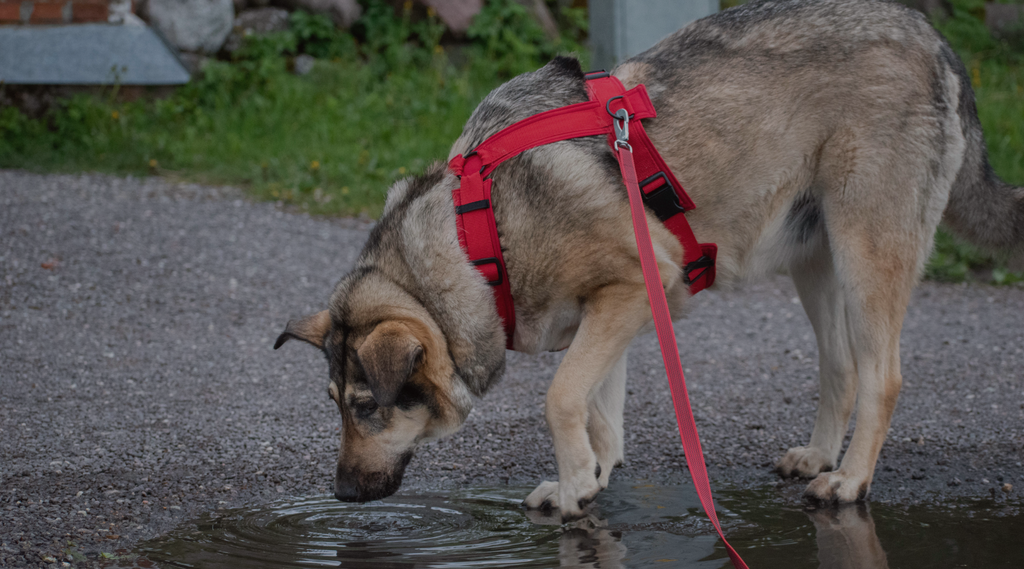
- Calm walk: A calm and quiet place, a long leash, and plenty of new and exciting information to analyze through the nose – this helps lower your dog's pulse and promotes relaxation. Studies have shown that the more space a dog has to move on a leash and the calmer the environment and opportunities for sniffing, the faster their pulse returns to normal.
- The opportunity to rest and sleep in peace and quiet: This may seem like a simple and logical recommendation, but very often our home environments are such that the dog cannot recover peacefully and sleep deeply. Try to provide your dog with a calm place to take a break and sleep peacefully after stressful events.
- Gentle petting: For dogs that enjoy touch, gentle petting can be very calming. Stroke your dog at a calm pace from head to tail. Petting the dog's chest is especially soothing.
- Chewing: For some dogs, chewing can be very calming. Offer them something suitable to chew on, such as a dried treat.
- Enriching activities: This is quite individual for each dog, what they like the most. For some, different food toys can be calming and beneficial, for others, nose work, for a third, training, or practicing familiar and well-established tricks.
If a dog has a high stress level, it is important to try to avoid factors that cause stress to the dog. Unfortunately, this is not 100% possible in every situation, but minimizing those stress-inducing factors can help a lot. This may mean that you need to limit walks for a while or do them in a different location.
If you can recognize how your dog behaves in stressful situations and how to support their recovery from stress, you will help your furry friend a lot. If your dog has long-term stress and you don't know how to support them or create a suitable plan, we recommend consulting a science-based dog trainer who practices force-free methods and can help create a plan tailored to your dog's and your needs.
Remember that every dog is different and patience and understanding are very important!